
English| EUR
Suggested for you
More currencies
Choose a language
Prague's beer culture is not a tourist attraction—it is the everyday rhythm of the city. The question of what beer Praguers drink has a clear answer rooted in Czech brewing tradition, and understanding it transforms a visitor's experience from sampling to participating.
Quick answer
Praguers drink pale lagers, almost exclusively. Pilsner Urquell, Budweiser Budvar, and Kozel are the three most common brands poured in the city's pubs, with Pilsner Urquell holding the largest share. Dark lagers like Krušovice Černé and unfiltered varieties such as Staropramen Nefiltrované appear on many menus, but pale lager—světlé pivo—accounts for the vast majority of what is ordered and consumed daily.
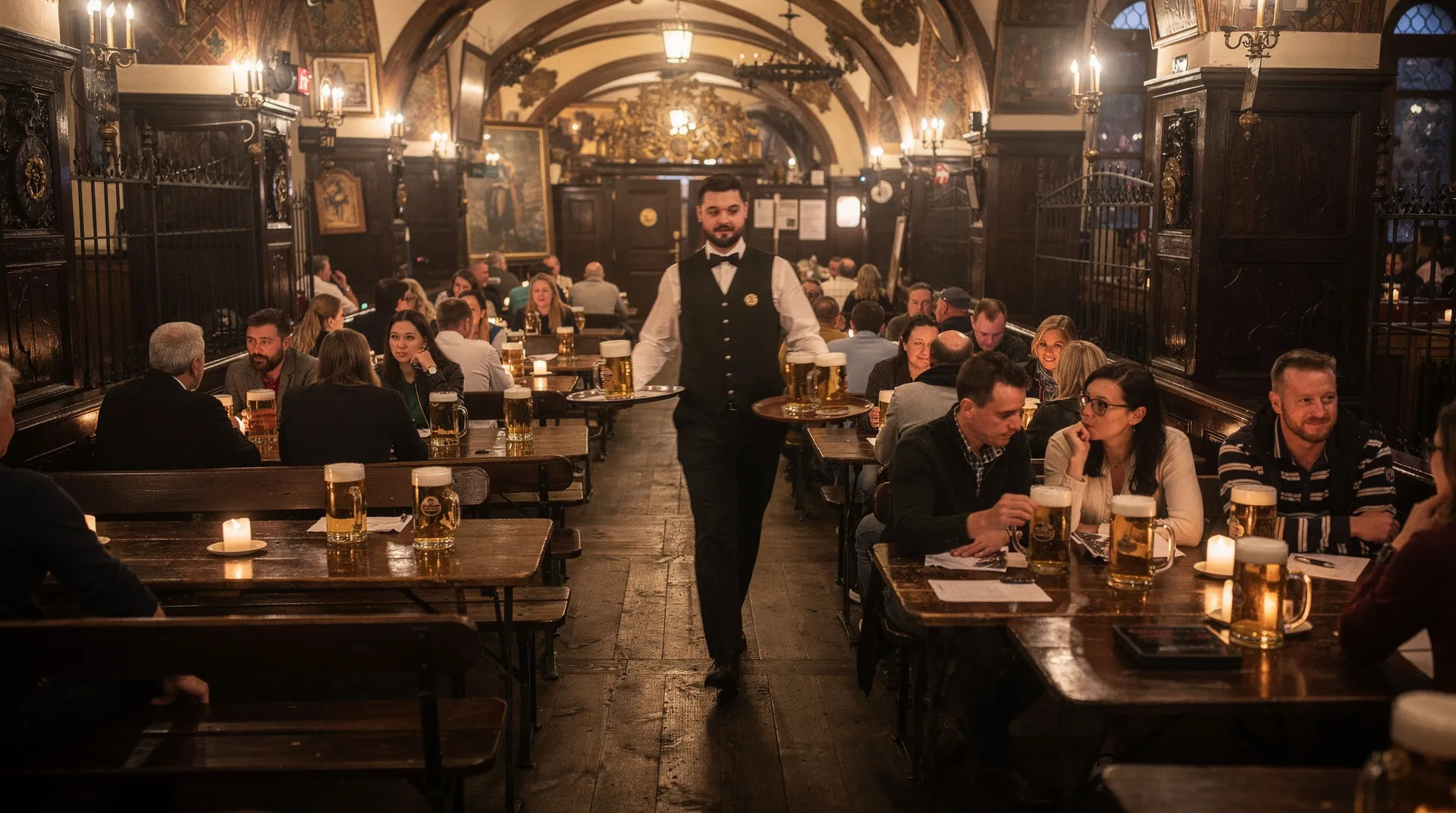
The Czech Republic drinks more beer per capita than any other nation, and Prague sits at the center of that tradition. What beer do they drink in Prague is answered not by a list of brands but by understanding a single style: the Czech pale lager, or světlé výčepní pivo, served at 10 to 12 degrees Plato. This is the beer that fills glasses in neighborhood hospodas, riverside terraces, and beer halls across the city, poured fresh from tank or keg and consumed within hours of its peak. Pilsner Urquell remains the flagship. Brewed in Plzeň since 1842, it defined the pilsner style and still represents the benchmark for balance, bitterness, and the soft floral note of Saaz hops. Budweiser Budvar, brewed in České Budějovice, offers a slightly maltier profile and is the second most widely poured lager in the capital. Kozel, with its goat emblem, is lighter and more sessionable, favored in neighborhood pubs where turnover is high and prices are low. Staropramen is Prague's own brewery, and while locals debate its standing against Plzeň and Budvar, it remains ubiquitous in the city center. Dark lagers occupy a smaller but steady niche. Krušovice Černé and Kozel Černý appear on most pub menus, offering caramel and roasted malt notes without the weight of a stout. Unfiltered lagers—označované as nefiltrované or kvasnicové—have grown in popularity over the past decade, prized for their cloudy appearance and fuller mouthfeel. These beers are alive, still fermenting slightly in the glass, and are considered fresher and more flavorful by a vocal segment of Prague's beer drinkers. Czech beer culture in Prague operates on a few unspoken principles. Beer is ordered by the half-liter, and a fresh pour is expected to arrive within minutes. The foam matters: a proper head should be dense, white, and capable of holding a coin. When a glass nears empty, the server will mark a new tally on the paper coaster unless the drinker signals otherwise. This is not a culture of tasting flights or rotating taps. Drinkers choose their beer and stay with it, often for the entire evening, valuing consistency and the rhythm of the pour over variety.
“Czech pale lager is not a category to explore—it is the category, and Praguers drink it with the confidence of people who know exactly what they want.”
The beer culture in Prague centers on a unique classification system and a preference for well-crafted lagers. Understanding these distinctions helps navigate the local beer scene.
These numbers represent the original gravity of the wort, indicating the extract content before fermentation. 10° is typically lighter and served as a standard session beer, while 12° offers a fuller body and higher bitterness.
Pale lager is the most common style found in Prague, characterized by its golden color and hop-forward profile. It is the defining style of the Bohemian brewing tradition.
Most beers in the city are produced using traditional decoction mashing, which creates a rich malt base. This technique is central to achieving the specific character of Czech-style lagers.
Dark lager, or černé pivo, is a regular fixture in most pubs. It often features roasted malt notes that provide a sweeter, toasted flavor profile compared to the standard pale options.
This style, known as a cut or mixed beer, is created by carefully layering pale and dark lagers in the same glass. It highlights the balance between the crispness of the pale and the depth of the dark variety.
Many establishments in Prague serve beer directly from chilled stainless steel tanks rather than kegs. This method minimizes carbon dioxide exposure and ensures the freshest possible pour from the brewery.
The best arrival window is 11:00–17:00, which avoids peak evening crowds and ensures the freshest lunch-time pours. Visiting during this time allows for a more relaxed exploration of Prague's beer culture.
—
Best for experiencing local pubs without the evening rush.
—
Ideal for catching the transition from lunch service to early evening activity.
Mild, 10°C to 18°C
These months offer balanced temperatures for walking between historic establishments.
Verdict: The best arrival window is daily between 11:00–17:00 to prioritize crowd avoidance and draft freshness.
Prague's beer culture follows unwritten rules that locals take seriously. Observing proper etiquette—from waiting for the foam to settle to understanding coaster signals—shows respect for centuries of brewing tradition.
In Prague, there is no standardized entrance fee for pubs and beer halls. You simply pay per glass based on the establishment's menu pricing.
Verdict: A typical adult pays only for what they consume, with total costs depending primarily on the location's proximity to tourist centers.
Beer halls and pubs in Prague typically maintain consistent daily operations throughout the week to serve local and international visitors. Establishments across the city remain accessible to patrons from morning until late evening.
Everything you need to know about what beer do they drink in prague
Most locals prefer pale lager, specifically Pilsner-style beer, which is renowned for its crisp taste and quality. When asking what beer do they drink in Prague, you will find that bottom-fermented lagers dominate the menu.
There is no entrance fee to enter traditional pubs or beer halls; you simply pay for the drinks you consume. Understanding what beer do they drink in Prague helps you appreciate that the focus is on the quality of the pour rather than admission costs.
The best arrival window is 11:00–17:00 to avoid evening crowds and ensure you receive the freshest pours. This timeframe is ideal for those researching what beer do they drink in Prague while seeking a relaxed environment.
Most establishments are open daily from 00:00–23:59, ensuring access throughout the week. While these are the standard operational windows, always check specific venues to see what beer do they drink in Prague at different hours.
Tipping is customary in local establishments, typically rounding up the bill or adding 10% for good service. It is a polite way to acknowledge the skill of the tapster serving your drink.
Many traditional pubs allow children during lunch hours, though settings become more adult-oriented in the evening. Always check the house rules of individual establishments before visiting with your family.
Etiquette involves placing your coaster on the table to signify you want another beer and never pouring your own drink if the glass is near empty. Respecting these local traditions improves your overall experience in the city.